
After a long flight, skip the taxi line and book a DiDi from the airport — metered, no haggling, and the driver finds you by license plate. The Airport Express rail is faster and cheaper in Beijing, Shanghai, and Guangzhou when you can carry your bags.
Exit the terminal
Follow the 到达 / Arrivals signs to the official pickup zone.
Request a ride
Open DiDi, drop your hotel pin, and confirm.
Meet the driver
Match the license plate in the app — no Chinese needed.
Arrive at the hotel
Pay in-app; keep a photo of the plate just in case.
Four steps from the arrivals hall to your room. The tools below handle the language gap for you.
1 Your Transport Options
Five ways out of the airport. Ranked by what actually works for a first-timer with luggage — price, time, and hassle all matter.
| Option | Price to centre | Time | Best for |
|---|---|---|---|
| DiDi (ride-hailing) | 150–200 RMB | 30–60 min | First-timers, solo travellers, luggage |
| Maglev / Airport Express | 25–80 RMB | 8–25 min + subway | Budget, light bags, Beijing / Shanghai / Guangzhou |
| Metro from airport | 2–10 RMB | 1–2 hr | Confident navigators, hotels near a line |
| Formal taxi queue | 150–200 RMB | 30–60 min | Cash users, Chinese speakers |
| Pre-booked pickup | Fixed at booking | 30–60 min | First-timers, families, heavy bags, late-night |
The sections below walk you through each option step by step. If you just want the short version:
| If this is you… | …take this |
|---|---|
| Set up Alipay / WeChat before flying | DiDi — predictable, no language barrier |
| Light bags, landing in Shanghai or Beijing | Maglev or Airport Express, then subway |
| Heavy luggage | DiDi or formal taxi — subway is a struggle |
| Minimum spend | Metro / Maglev (~50–100 RMB total) |
| Maximum comfort | DiDi (~100–200 RMB) |
| Zero stress / late-night / heavy bags | Pre-booked pickup — driver meets you, fixed price |
2 DiDi: Download & Ride
DiDi is the easiest way out of the airport by far. Tap your destination and the driver’s GPS does the rest — no negotiation, a fixed price, and the driver is rated (so they behave). Download the app before you fly, or grab it on the airport WiFi; the mini-guide below shows the setup step by step.
DiDi setup — step by step
To actually ride: open DiDi, drop your hotel pin (or paste the Chinese address from your booking), and confirm. The app shows your driver’s license plate — match it at the pickup zone, no Chinese needed. Pay in-app with Alipay or WeChat Pay (both take international cards), and keep a photo of the plate just in case.
Estimate your fare
Timeline: Airport to Hotel by DiDi
Exit airport
~5 min · to pickup zone
Request ride
~2 min · drop hotel pin
Driver arrives
5–10 min · match plate
Drive to hotel
30–60 min · traffic
Check in
You’re here
Total: about 45 min – 1.5 hours from the terminal door to the front desk.
3 Taking the Metro
The metro is the cheapest way into town — but only practical with light bags and a hotel near a line. Once you’re on, it’s fast, fixed-price, and immune to traffic. The only real challenge is navigation, and that’s where Amap (高德) comes in.
Amap (Gaode) setup — step by step
Riding the subway takes three taps:
- Enter your hotel address. Type it in English, Pinyin, or paste the Chinese address from your booking — Amap reads all three.
- Tap Route, then pick the subway / 地铁 (Transit) option. Amap shows the exact lines, which exit letter to use, walking time between transfers, and the fare in yuan.
- Follow the directions. Colour-coded line signs on the platform match the app — track your stops and watch for your exit.
4 Pre-Booked Airport Pickup
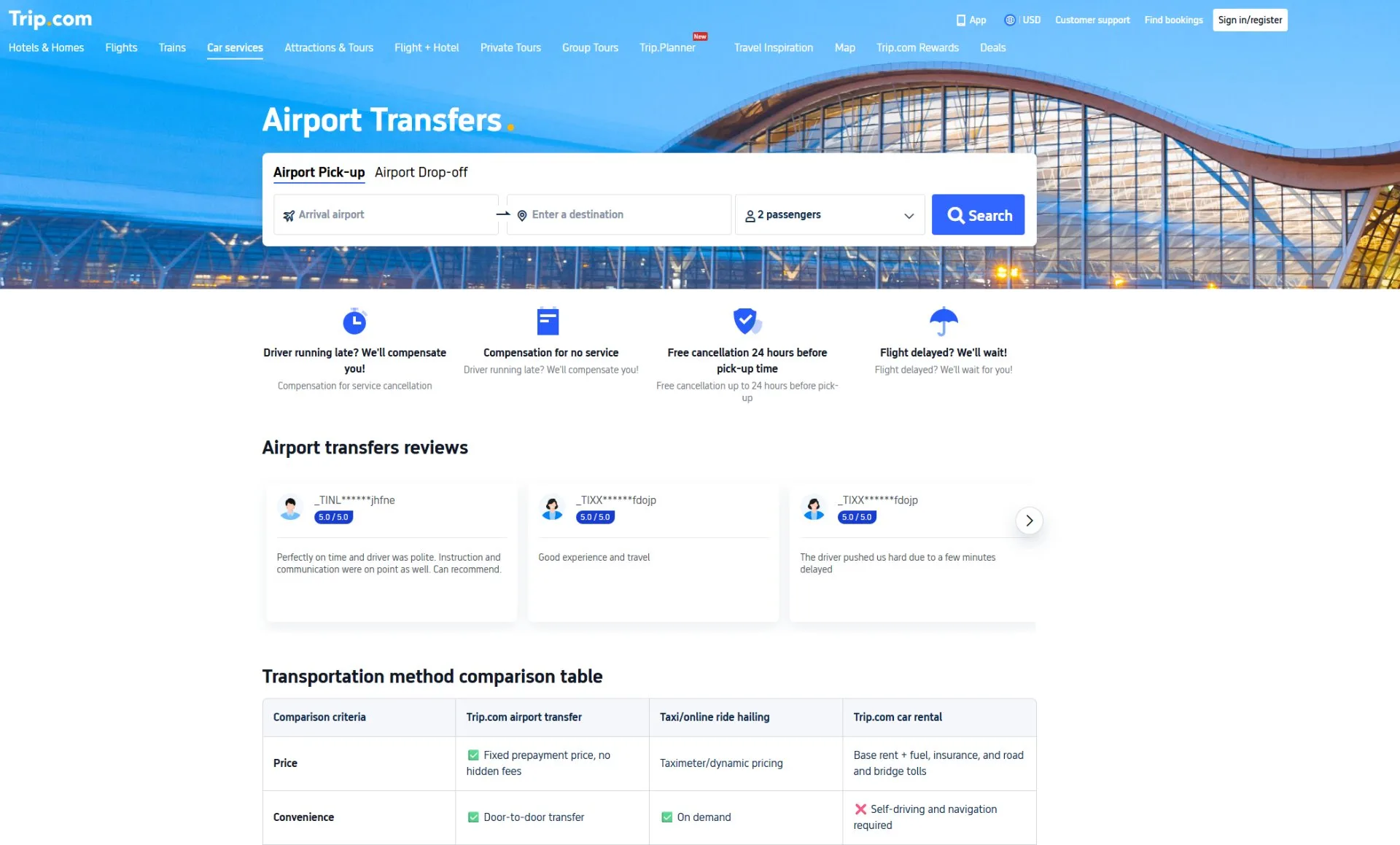
A pre-booked pickup is the zero-stress way out. A driver waits at arrivals holding your name, helps with your bags, and drives you straight to the hotel — no app to set up, no haggling, no scramble for cash or Chinese. It’s the calmest choice for first-timers, families, heavy luggage, or a late-night landing when the metro has stopped running.
Book before you fly and the driver tracks your flight, so they’re there even if you’re delayed. The price is fixed and shown up front in your own currency — no meter, no surprises.
5 Taking a Taxi
The formal taxi queue is the old-school, cash-friendly option. Follow the 出租车 / Taxi signs from arrivals to the official rank — you’ll either take a numbered ticket or join a marked line, then a uniformed marshal waves you to the next cab. Show the driver your hotel name and address (Chinese if you have it); the card tool below does that for you.
Taxi card — show the driver
Ignore the “Taxi! Cheap price!” touts.
Unofficial drivers wait outside arrivals and quote 500–1000 RMB for a 150–200 RMB ride, sometimes taking “scenic routes.” Walk straight to the official queue or open the app inside the terminal. If they ask for 500, walk away.
6 Maglev & Airport Express
Shanghai’s Maglev hits 430 km/h and reaches Longyang Road in about seven minutes — it beats any taxi in the rush hour if you’re not hauling oversized bags. Beijing’s Airport Express is 25 RMB and 20 minutes to the CBD; Guangzhou has its own express line too. Buy at the machines (switch to English) or a ticket window.
Fast, fixed-price, and an experience in its own right — but you’ll still need a subway or short taxi to the door.
7 Other Tips
- Keep cash accessible (you changed it at the airport, right?).
- Sit in the back seat — safer and standard practice.
- Quietly photograph the license plate; it’s just a safety record.
- Don’t stress — drivers are used to foreign passengers.