
Navigating Chinese entry requirements is much simpler today. Depending on your passport nationality and itinerary, you will fall into one of three entry categories:
1 240-hour (10-day) transit visa-free
The transit visa-free exemption allows eligible travelers to explore designated regions of China for up to 10 full days (240 hours) without applying for a visa in advance.
Extended from 144 to 240 hours (10 days) and currently active — verify before you travel. Source: National Immigration Administration
| Visa-free (direct) | 240h transit | Visa required | |
|---|---|---|---|
| Max stay | up to 30 days | up to 10 days | 30–90 days |
| Apply in advance? | No | No | Yes (L-visa) |
| Ticket rule | Any | Onward to a 3rd country | Any |
How the 240-hour policy works
Depart Country A
Your home country
Arrive in China
One of 65 ports
Up to 240 hours
Explore freely
Depart to Country B
A third country
Key rule: Your onward ticket must go to a different country (B), not back to where you came from (A). A routing like NYC → Beijing → NYC does not qualify.
Three requirements
- You must hold a passport from an eligible country.
- You must have a valid onward ticket to a third country.
- You must enter and exit through one of the 65 ports across 24 provincial-level regions.Source: National Immigration Administration
Clock timing
- Your 240 hours start at 00:00 on the day after you arrive.
- The day you land does not count toward the 240 hours.
- You must leave before the window closes.
Critical rules
- The 240-hour stay is one continuous period from your first entry into mainland China. You can travel between the permitted regions and visit several mainland cities in one trip (“one journey, multiple stops”). Hong Kong, Macau and Taiwan count as a separate ‘third region’ — so Country A → mainland China → Hong Kong → Country B qualifies as one transit. Leaving the mainland for Hong Kong, Macau or Taiwan ends that transit; re-entering the mainland from there can start a fresh 240-hour clock only if you hold a confirmed onward ticket to a different third country. You can’t extend your original stay by bouncing to Hong Kong and back to your country of departure.
- Overstaying brings fines, entry bans, or deportation.
- You must register with your hotel or the police within 24 hours.
Eligible countries and entry points
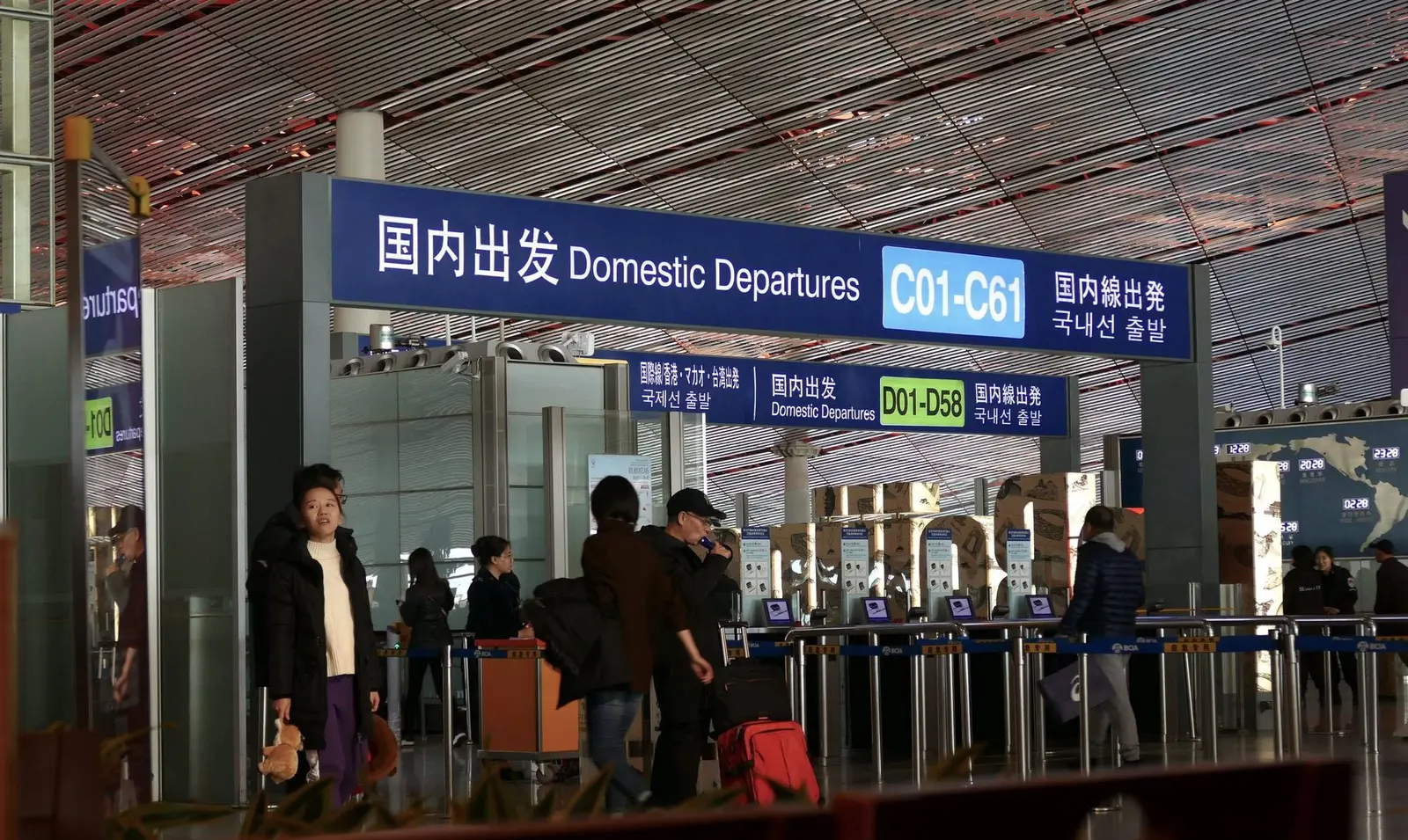
The eligible-country list runs to 57 nations, and 65 ports across 24 regions take part. Rather than memorise it, confirm your passport in seconds with the checker below.
2 Direct 30-Day Visa-Free Entry
China offers direct 30-day visa-free entry for citizens of an expanding list of partner countries. If your passport qualifies, you do not need an onward transit ticket or a visa — simply present your valid passport at immigration upon landing.
3 Standard Tourist Visa (L-Visa)
If you do not qualify for direct visa-free entry or the 240-hour transit exemption, you must apply for an L-Visa at a Chinese embassy, consulate, or visa center in your home country before traveling.
- Processing Time: 5–15 working days.
- Duration & Validity: Single-entry visas typically allow up to 30 days of stay per entry and are valid for 30–90 days from issuance.
Police Registration Tip: Licensed hotels register your stay with local police automatically at check-in. If you stay in a private apartment or Airbnb, you must register at the local police station (or via their official mini-program) within 24 hours of arrival.
4 Visa Checker
Not sure where you stand? Pick your country and get your answer in seconds — no scrolling, no guessing.
Live tool — select your passport
5 Common mistakes to avoid
- A return ticket to the same country does not qualify for transit visa-free — the onward flight must reach a different country.
- Overstaying: once your 240 hours are up, you must leave. Penalties are severe.
- Forgetting hotel registration: register at a hotel within 24 hours, or visit the police station.
- Leaving mainland China: Hong Kong, Macau and Taiwan work best as the onward leg of your journey (e.g. mainland → Hong Kong → your next country), not as a mid-trip bounce-back. If you exit the mainland for Hong Kong or Macau, that ends your current transit; re-entering the mainland can start a fresh 240-hour clock only if you hold a confirmed onward ticket to a different third country. Bouncing back to your original country of departure does not qualify.
Pro tips
- Keep your onward flight ticket and hotel confirmation ready at immigration.
- Have your hotel address written in Chinese (ask reception to write it).
- The 240-hour clock starts at 00:00 the day after arrival, so you actually get 10 full days plus the remaining hours of landing day.
- Using Airbnb? You must register with the police within 24 hours.
- Hong Kong and Macau count as a separate ‘third region.’ A routing like mainland → Hong Kong → your next country qualifies as transit. If you exit the mainland and re-enter from Hong Kong, you can open a new 240-hour transit (fresh clock) only with a confirmed onward ticket to a different third country — you can’t extend your original stay by bouncing back and forth.
6 Arrival card (入境卡)
Since 20 November 2025, foreign travellers can fill in China's arrival card (入境卡) online before they fly — it's free and official. You can also complete a paper card on the plane or at the border. Do it ahead of time to breeze through immigration.
Interactive guide — tap through the steps
Step-by-step breakdown
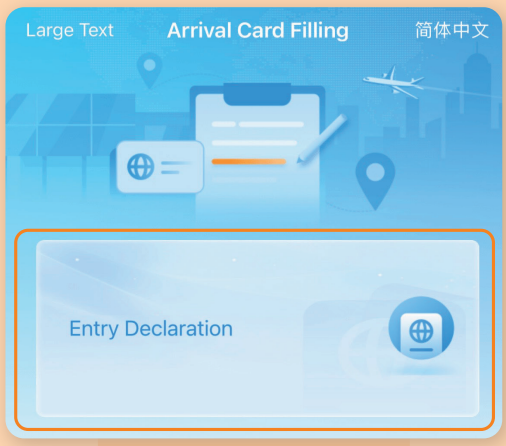
On the Arrival Card Filling homepage, tap the large “Entry Declaration” button to start. Read and agree to the application instructions when prompted.
Select your ID Document Type (usually “Ordinary Passport”). Then upload or take a photo of your passport data page. Tap the image to retake if it looks wrong.
Complete all fields marked with an asterisk (*): passport number, entry transportation mode (plane/train/ship), city of entry, port of entry, and flight or train number.