

Chinese Etiquette for First-Time Visitors: The Quiet Rules That Make or Break Your Trip初次到访者的中国礼仪:决定你旅途体验的隐形规则
5 Key Takeaways5 个关键要点
- Don't tip. Tipping isn't customary on the mainland; pay the stated price and say "xiè xie."不要给小费。中国大陆没有给小费的习惯;付清标价说声"谢谢"即可。
- Share the table, mind the chopsticks. Use the serving spoon; never stand chopsticks upright in rice or pass food tip-to-tip.共享餐桌,注意筷子。用公勺取菜;切勿把筷子插在饭里,或用筷尖对筷尖递食。
- Greet warmly, protect "face." A smile and "nǐ hǎo" go far; avoid public confrontation or blunt criticism.热情问候,顾及"面子"。微笑加"你好"很管用;避免当众争执或直言批评。
- Gifts: both hands, skip the unlucky. Avoid clocks, pears, and sets of four; a red envelope is always welcome.送礼:双手递接,避开忌讳。避开钟、梨和四件套;红包永远受欢迎。
- Point the camera freely, with limits. Street life and landmarks are fair game; skip military sites, borders, and indoor temple bans.拍照可随意,但有边界。市井与地标随便拍;军事设施、边境和室内禁拍的寺庙要避开。
1 Before you go: the mindset that prevents most slips 出发前:避免大多数失误的心态
China is one of the most welcoming places you can visit, and locals are remarkably forgiving of newcomers who don't get every custom right. The single most useful mindset is simple: courtesy matters more than correctness. A genuine smile and a little effort to follow local norms will smooth over almost any slip.中国是最热情好客的旅行目的地之一,当地人对外国游客偶尔出错非常宽容。最有用的心态其实很简单:礼貌比"做对"更重要。真诚的微笑加上一点入乡随俗的努力,几乎能化解任何小失误。
Most Chinese etiquette isn't a list of rigid rules so much as a preference for harmony — keeping interactions smooth, avoiding embarrassment, and showing respect without making a spectacle. You're not expected to behave like a local; you're expected to be a considerate guest. With that frame, the few specific habits below will feel intuitive rather than like a test.中国的礼仪与其说是一堆硬性规矩,不如说是对"和谐"的偏好——让互动顺畅、避免尴尬、低调地表达尊重。没人指望你表现得像本地人,只希望你是个体贴的客人。有了这个心态,下面几条具体习惯会显得自然而然,而不是一场考试。
One practical note: a handful of phrases go a long way. "Nǐ hǎo" (hello), "xiè xie" (thank you), and "duìbuqǐ" (sorry) are understood everywhere, and using them signals respect before you've said a word of real conversation.一个实用建议:几句简单的中文能帮大忙。"你好"(nǐ hǎo)、"谢谢"(xiè xie)、"对不起"(duìbuqǐ) 在任何地方都通用,开口用上它们,在真正交谈之前就已经表达了尊重。
2 Tipping, gifts, and 'face' 小费、送礼与"面子"
Tipping is not a thing in mainland China. Restaurants, taxis, hotels, and bars do not expect tips, and leaving one can occasionally confuse a server more than it pleases them. Pay the stated price, say "xiè xie," and you've done exactly the right thing.中国大陆没有给小费的习惯。餐厅、出租车、酒店和酒吧都不期待小费,偶尔留下小费反而会让服务员不知所措。付清标价,说声"谢谢",你就做得完全正确了。
Gifts and "face." "Face" (miànzi) is a person's social dignity — their standing in the eyes of others. The golden rule is to never cause someone to lose face in public: avoid blunt criticism, loud confrontation, or calling someone out in front of a group. Giving and receiving gifts is common in business and among friends. Offer and accept with both hands, and a small token from your home country is always appreciated.送礼与"面子"。"面子"(miànzi) 指的是一个人的社会尊严——在他人眼中的体面。黄金法则就是绝不在公开场合让人"丢面子":避免直白的批评、大声的争执,或当众让人难堪。在商务和朋友之间,互赠小礼物很常见。递接礼物都要用双手,带一点家乡的小纪念品总是受欢迎。
A few gift taboos to sidestep: clocks (the phrase "giving a clock" sounds like "attending a funeral"), pears (sharing a pear sounds like "separating"), and anything in sets of four (the number four sounds like "death"). A red envelope (hóngbāo) with a small amount of money, by contrast, is a universally welcome gesture.有几个送礼雷区要避开:钟("送钟"谐音"送终")、梨("分梨"谐音"分离"),以及任何四件套("四"谐音"死")。相反,装着一点钱的红包(hóngbāo)则是人人都欢迎的心意。
3 Dining and chopstick etiquette 用餐与筷子礼仪
Eating is the social heart of China, and a few table habits will make you look comfortable rather than careless. Most meals are served family-style: shared dishes in the center, with a serving spoon or chopsticks set aside for moving food to your own bowl. Use that serving utensil, not your personal chopsticks, to take from the shared plates.吃饭是中国社交的核心,掌握几个餐桌习惯能让你显得从容而非粗疏。大多数饭菜是"合餐"形式:中间摆着共享的菜,另备公勺或公筷把菜夹到自己的碗里。用公勺公筷,而不是自己的筷子,去夹共享的菜。
Chopstick don'ts matter more than chopstick form. Never stand your chopsticks upright in a bowl of rice — that mirrors incense burning at funerals. Never pass food chopstick-to-chopstick, another funeral echo. And don't drum with them or point them like a spear.筷子的"禁忌"比"姿势"更重要。永远不要把筷子竖直插在饭碗里——那很像葬礼上烧香。也不要用筷子尖对尖地递食物,同样是丧葬的联想。更不要拿筷子敲碗或像长矛一样指人。
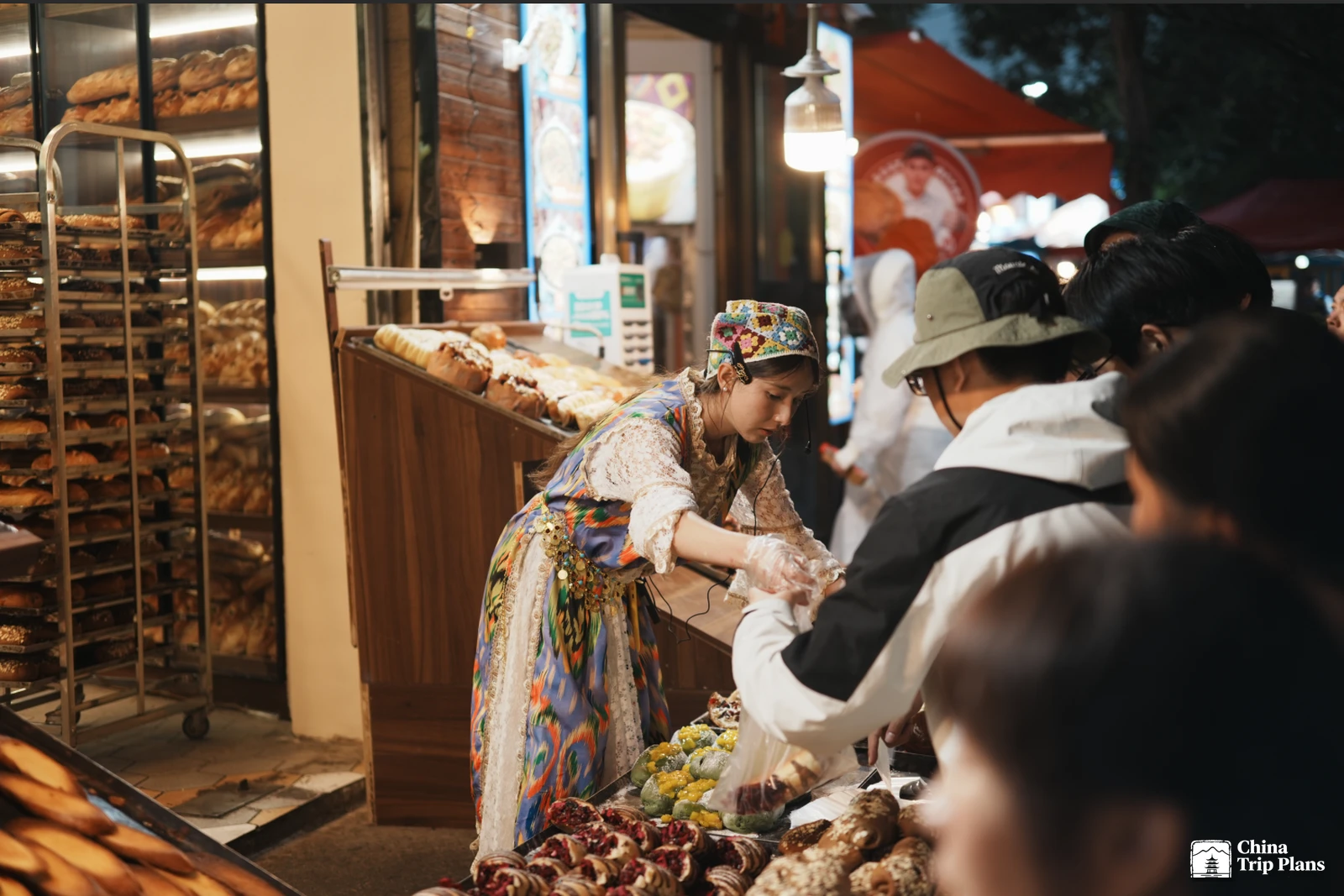
Small courtesies: when someone fills your tea, tap two fingers lightly on the table to say thanks (a Ming-dynasty tradition). The host or eldest person typically starts eating first, and the host almost always insists on paying — let them, and offer to return the favor another time rather than splitting the bill.几个小礼节:别人给你添茶时,用两指轻叩桌面说谢谢(这是明代传下来的习俗)。通常由主人或长辈先动筷,而且主人几乎一定会坚持买单——就由他们请,改天再回请,而不是当场 AA。
4 Greetings, photos, and public behavior 问候、拍照与公共行为
A nod or a handshake plus "nǐ hǎo" is the standard greeting; a warm smile carries you the rest of the way. Physical affection in public is rare, so save hugs for close friends. When meeting someone formally, a slight nod and using both hands to exchange a business card or gift reads as respectful.点头或握手,再加一句"你好",就是标准的问候方式;剩下的靠真诚的微笑就足够了。公共场合的亲密举动很少见,拥抱留给亲密朋友就好。正式场合见面时,微微点头、用双手递接名片或礼物,会显得很有礼貌。
Photography: street life, markets, and famous landmarks are fair game and locals are usually happy to be in your shots if you smile first. But keep your camera down at military installations, border crossings, and police posts — these are off-limits and enforced. Inside some temples, museums, and palaces, "no photo" signs are real; respect them.拍照方面:市井生活、集市和著名地标都可以拍,只要你先微笑,当地人通常很乐意入镜。但在军事设施、边境口岸和警察岗亭前请收起相机——这些是明令禁止的。一些寺庙、博物馆和宫殿内"禁止拍照"的标识是认真的,请遵守。
In public spaces, a little quiet goes far. Subway cars have silent compartments, and loud phone calls draw looks. Queues form politely even if they look loose — step in at the back rather than the front.在公共空间里,安静一点很加分。地铁车厢有静音车厢,大声打电话会引人侧目。排队即便看起来松散,也还是自觉的——请从队尾加入,而不是插到前面。

5 Bargaining: where it's normal, where it's not 讨价还价:哪里正常,哪里不是
Bargaining in China isn't rudeness — at the right venues it's the expected dance, and both sides enjoy it. The key is reading the room:在中国,讨价还价不是无礼——在合适的场所,它是预期中的互动,双方都乐在其中。关键在于读懂场合:
- Expected:预期中: open markets, street stalls, flea markets, and many souvenir shops. Start around half to two-thirds of the first price and meet in the middle with a smile.开放市场、街边摊、跳蚤市场和许多纪念品店。从最初报价的二分之一到三分之二起,带着微笑取中间价。
- Not done:不适用: malls, supermarkets, chain stores, and restaurants. Prices are fixed, and haggling would be odd.商场、超市、连锁店和餐厅。价格是固定的,讨价还价会很奇怪。
- Your best tool is walking away.你最好的工具是走开。 If the price won't move, a friendly exit usually brings a call-back with a better number. If it doesn't, there's another stall.如果价格不动,友好的离开通常会换来一个更好的回叫报价。如果没有,还有另一家摊。
Keep it good-natured. The goal on both sides is a price that feels fair, not a win-lose fight. A little humor gets you further than steeliness, and the story makes a better souvenir than the discount.保持善意。双方的目标都是一个感觉公平的价格,而非输赢之争。一点幽默比硬撑更能让你走远,而且这故事比折扣更成好纪念。
Frequently asked questions常见问题
No. Tipping isn't customary on the mainland — restaurants, taxis, hotels, and bars don't expect it. Pay the stated price and say "xiè xie." In Hong Kong and Macau, where Western tipping habits are more common, a service charge is sometimes added to the bill instead.不需要。中国大陆没有给小费的习惯——餐厅、出租车、酒店和酒吧都不期待小费。付清标价,说声"谢谢"即可。在香港和澳门,受西方习惯影响,账单中有时会直接加收服务费。
Not at all. A smile and "nǐ hǎo" (hello) are appreciated, and most people are happy to help even without shared language — translation apps and gestures go a long way. English is limited outside major cities and tourist sites, so patience and a friendly attitude matter more than fluency.完全不会。一个微笑加"你好"就很受用,哪怕语言不通,大多数人也乐意帮忙——翻译软件和手势能帮大忙。除了大城市和景点,英语普及度有限,所以耐心和友好的态度比流利更重要。
Street life, markets, and landmarks are generally fine to photograph, and locals often enjoy being in your pictures if you smile first. Keep your camera away from military sites, border crossings, and police posts, and respect "no photo" signs inside some temples, museums, and palaces.市井生活、集市和地标通常都可以拍,只要你先微笑,当地人往往很乐意入镜。请远离军事设施、边境口岸和警察岗亭,并遵守部分寺庙、博物馆和宫殿内"禁止拍照"的标识。

Want the offline-first-trip kit?想要离线版首次出行工具包?
The 这份China Travel Essentials 2026China Travel Essentials 2026 kit bundles visa, payments, connectivity, transport, and this guide into one printable checklist you can carry offline, no signal required.工具包把签证、支付、联网、交通和本指南打包成一份可打印清单,可离线携带,无需信号。
Get the guide →获取指南 →Sources & notes来源与说明
This guide links to official and authoritative sources. Rules and prices change, so confirm the current version with the official source before you book.本指南链接官方与权威来源。规定和价格会变,订票前请向官方来源确认现行版本。
- Ministry of Culture and Tourism of China中华人民共和国文化和旅游部National tourism authority and official guidance.国家旅游主管部门与官方指引。
- UK Foreign Travel Advice: China英国外交部中国旅行建议Official guidance on local laws and customs for visitors.关于当地法律与习俗的官方出行建议。